
04 July 2025 Athens Exhibition Says the Revolution Could Begin on Your Plate | 04 June 2025 Artforum, "Diana Anselmo" | 16 April 2025 Frieze, "Must-See: The Tears of Karl Lagerfeld" | 16 April 2025 Süddeutsche Zeitung Magazin, "Mit welcher Haltung kommt man in der Kunstwelt am weitesten, Maurizio Cattelan?" | 09 April 2025 The Berliner, "Consider Listening: An exhibition urging calm amidst outrage" | 02 April 2025 Wallpaper, "Aboard Gio Ponti's colourful Arlecchino train in Milan, a conversation about design with Formafantasma" | 26 March 2025 Frieze, "Diego Marcon’s Films Conjure a Familiar, Grotesque World" | 19 March 2025 Arts Hub, "1500-degree molten steel installation, inspired by Caravaggio, to drip from the ceiling of Mona" | 15 May 2024 Frieze, "Silvia Rosi Gives Voice to Her Parents’ Migration Story" | 30 March 2024 The Korea Times, "Foreigners Everywhere: Artist duo who inspired this year's Venice Biennale lands in Seoul" | 07 February 2024 Artnet News, "Ceramics Are as Contemporary as a Smartphone: Chiara Camoni on Her Tactile Sculptures"
Virigina Russolo
interviews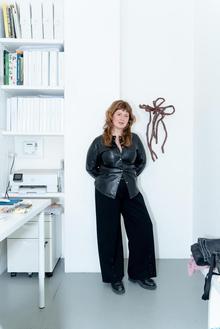
07 June 2026
Artists
Virginia Russolo: An International Journey Through Art, Anthropology, and Ritual Practices
Born in Oderzo (Treviso) in 1995, Virginia Russolo belongs to a generation of artists whose identity has been shaped through a deeply transnational experience. Raised between Italy, the United States, Japan, the United Kingdom, and the Netherlands, she developed from an early age an outlook open to cultural differences and to the many ways in which societies negotiate their relationship with nature, the sacred, and memory. This continuous crossing of geographies and traditions now constitutes one of the founding elements of her artistic research.
Following years of international education, she graduated in 2017 from the Ruskin School of Art at the University of Oxford, where she developed an interdisciplinary approach combining artistic practice, theoretical research, and an interest in cultural anthropology—elements that continue to characterize her work. Today, she lives and works between Italy and Greece, a further passage that testifies to the nomadic nature of her practice.
This international biography is directly reflected in her works. Through organic materials such as beeswax, propolis, silk, horns, hides, and resins, the artist creates works that weave together references drawn from different cultures, bringing European folklore, Eastern cosmologies, Mediterranean ritual practices, and contemporary reflections on ecology into dialogue.
In this sense, Virginia Russolo embodies a figure that is increasingly present in the international contemporary art scene: that of the artist who crosses geographical and cultural boundaries in order to build a language capable of connecting ancestral knowledge and global sensibilities.
In 2025, RIBOT dedicated her first solo gallery exhibition to her, A Darkness Shining in Brightness Which Brightness Could Not Comprehend, curated by Domenico de Chirico. The exhibition represented a moment of consolidation in her international trajectory, bringing together new sculptures, installations, and paintings made with wax, propolis, resins, and other natural materials, centred on themes of metamorphosis, ritual practices, and relationships between different species.
Your biography has been marked by strong international mobility from an early age: Italy, the United States, Japan, the United Kingdom, and the Netherlands. How has this transnational dimension influenced the way you look at materials, the sacred, and memory?
Yes, I grew up in Italy until I was 12 years old and then lived in Portland, Oregon, and Tokyo until I was 19. I subsequently spent three years in Oxford during university, and since graduating I have been living between Italy and the island of Crete, where I have my studio and carry out most of my research and production. I believe that nomadism is inseparable from the way I perceive myself, the world, and therefore also my creative expression. Perhaps the most accurate feeling I can find to describe it is that I find it natural and necessary to move in and out of many different worlds and build bridges. The answers to my curiosity are always there, but sometimes they are in another culture or another time. I believe that my artistic practice is about materializing, through matter, a need to discover points of access to the sacred dimension. I am always living between two dimensions, and therefore I believe that travel is my modus operandi.
In 2017 you graduated from the Ruskin School of Art. What did it mean to be educated abroad at such an early stage of your career?
I did not have the perception of going abroad because, for me, that concept ended when I was 12 years old. Therefore, moving to England from Japan had a different meaning. On the contrary, the University of Oxford interested me because I wanted to return to Europe after being educated in America and Asia, so I experienced it as a reconnection with my origins.
Do you think that studying outside Italy changed the way you perceive the figure of the artist and the contemporary art system?
My perception of the figure of the artist and of the system is so unstable that the only thing I can say clearly is that they are always changing. I believe they change according to what I need, or perhaps they almost emerge only when I have a need. I am used to living in places outside the context in which my art moves. When I create, I need a great deal of nature and silence, to lose as many traces of myself as possible, and for this reason Crete is very important. Then I find those same sensations in central Beijing or Milan when I travel for work and moments of sharing are created, which is how I would like to describe the “art system,” and moments in which I am perceived as an “artist.”
Today many young artists see international education as an almost mandatory necessity. In your case, was it a natural choice, a professional strategy, or a consequence of your personal path?
For a long time it was not my choice; I travelled with my family. Then it became the most natural dimension for me. It was never a professional strategy because that is not a way of thinking that belongs to me or that I am able to apply to my way of making art. I greatly admire, and sometimes feel a little envious of, those who are educated in one place and develop a deeply rooted sense of belonging.
Tell us about your most recent experience abroad: how did it come about, how did it develop, and what did it contribute to your professional growth?
I have just returned from a research trip to northern Chile. It was a journey organized by the Italian Cultural Institute in Santiago, supported by the Ministry of Foreign Affairs and International Cooperation within the Wonderful! Art Research Program of Museo Novecento. I travelled for a month and a half through the northern deserts, choosing San Pedro de Atacama as my main destination. It was a very powerful experience, beginning with the fact that San Pedro is an oasis on a desert plateau at the foot of the Andes, so my body adapted to living at 2,600 metres above sea level and then moving into the Andes at 4,000 metres, eventually climbing Cerro Toco volcano at 5,600 metres. My research concerned the forms of water in the desert and the rituals connected to it among the Lickanantay people (the Indigenous population of the area). This research led me to explore the territory extensively, both horizontally and vertically. It is too early to say how this experience will influence my artistic practice, but it was a journey that confronted me with my limits in perceiving natural forces, and with forms of spirituality very different from those I had encountered before. Some of these limits expanded to such an extent that I returned with new capacities for perception and new visions. I am now curious to see how they will express themselves through matter.
Looking at your path, how important have residencies, educational programmes, and institutional collaborations been compared to galleries?
Residencies are important to me because, living in an isolated context, they are moments of exchange and collective learning. For example, my experience with Fondazione Elpis, which through Una Boccata d’Arte gave me the opportunity to immerse myself in the culture of inland Sardinia. There, in 2024, I decided to live and work alongside a family of artisans (Bottega Artigiana Campanacci Floris) who have produced handcrafted cowbells for generations, in order to create my works. At the same time, my relationships with galleries (Ribot in Milan, CLC Gallery Venture in Beijing, and Shahin Zarinbal in Berlin) have allowed me to experience profound artistic growth. For me, creating a solo exhibition and bringing my inner world out into the open in that way is the thing that stimulates me the most. I am very grateful when gallerists give me that kind of trust.
You were a Visiting Art Scholar at Shanghai Jiao Tong University and participated in programmes such as Rupert. How important is it today for a young artist to build international networks through hybrid experiences combining studio practice, research, and residency programmes?
I believe the importance depends on the artist’s needs. Sometimes I ask myself whether it is actually necessary for me to travel. I know that it satisfies a deep desire to know more about the world and about myself, but spending an entire year in the studio would satisfy, in a different way, the same need. I believe that at the basis of everything there is listening to one’s own needs: whether there is a need to go out and seek exchange, introspection, learning, unlearning, identifying one’s context, or losing it.
Internationalization is often discussed as though it were accessible to everyone, but travelling, studying abroad, or undertaking residencies involves very high costs. In your view, does the contemporary art system risk favouring those who already possess a certain degree of economic and cultural mobility?
I believe that a CV can sometimes act as glamour, in the sense of a spell. I am somewhat wary of the importance given to an international CV in certain environments of cultural production and the art trade. I cannot attribute this feeling to an “art system,” but on my own scale I try to stay close to professional figures who prioritize the quality of the work. To develop the quality of one’s artistic practice, time is necessary, and undoubtedly this kind of deep and contemplative time is a luxury given the priorities imposed by our society. However, I believe it is important, as an artist, to question certain criteria promoted by the art market and not fall under the glamour of an international CV, but instead remain focused on the quality of the work.
What alternative strategies would you recommend to a young artist who does not have the financial possibility to move abroad or study overseas?
I believe that the most important thing is the inner journey. This can be stimulated by an external journey, a trip abroad, but not necessarily. I would suggest finding one’s own key to accessing the inner journey.
Looking back on your experience, what have been the most concrete tools that helped you build an international network: scholarships, open calls, personal relationships, social media, galleries, or residencies?
I recognize that certain fairs such as Basel Liste do indeed have a significant impact when it comes to connecting with international professionals with whom collaborations can be built. Open calls were important at the beginning of my path nine years ago; later, as one gets to know oneself better, energies become focused on more specific experiences.
Do you think there are now more sustainable and accessible ways to build an international presence than there were ten years ago?
I graduated and began building my artistic practice nine years ago, so my ability to grasp changes of such depth is limited. It was certainly a surprise for me to move much of my life and work to Crete, outside the contemporary art circuit, and discover that this choice did not exclude my work from that circuit. But it is still a mystery to me as well.
Your generation seems to experience internationalization not as an achievement but as a starting condition. Do you recognize yourself in this idea?
For me it was a starting condition, but for different reasons. I consider myself extremely fortunate to have been exposed to many different working models beyond the Italian one, and it saddens me greatly when the choice to go abroad is not a choice but a necessity in order to compensate for the lack of support and recognition for artists in Italy.
Do you have the impression that Italian artists of your generation are more open to international collaborations and networks than in the past?
I do not think it is a matter of openness but, unfortunately, of the need for resources that are more difficult to obtain in Italy.
What differences do you perceive between the Italian system and those of other countries where you have worked, especially in terms of support for emerging artists?
It is difficult for me to answer with authority because I still do not feel that I understand what the art system is. But from the realities I have experienced in Italy and abroad, I sometimes perceive a difficulty in Italy in recognizing the necessity of the artist’s role in the present.
What would you advise today to an Italian artist under 30 who wishes to build an international career without losing their cultural identity?
I feel unprepared in front of this question because, being 30 years old myself, I would feel uncomfortable giving advice to my peers. I am certainly always trying to understand what a cultural identity is, and especially what an Italian cultural identity is, so I believe that I am the one who needs advice from my Italian peers.
© All rights reserved
other interviews
other interviews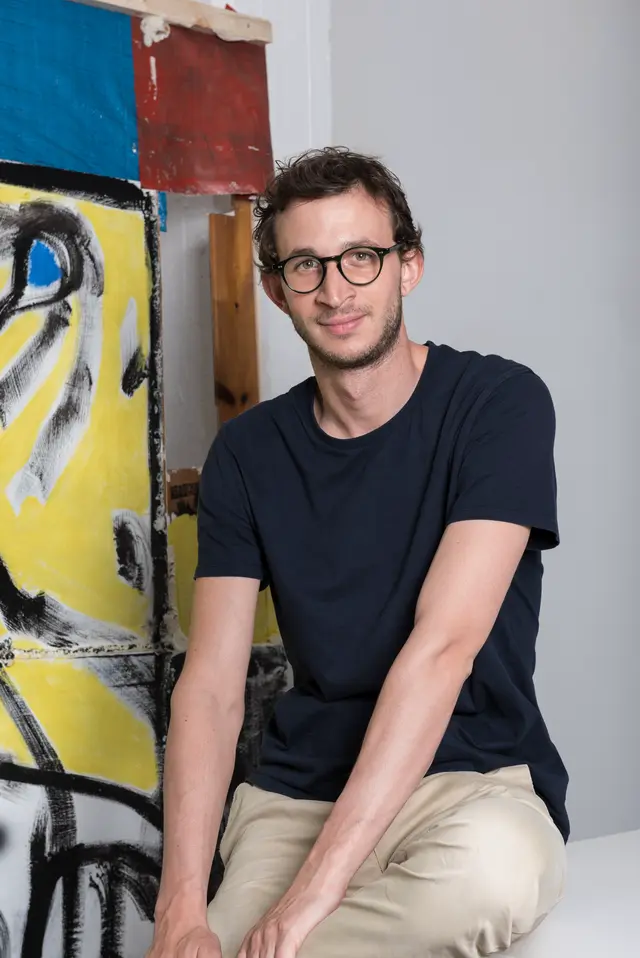 Matthew Noble
: "Time, Not the Market, Is What Builds an Artist”
Artists
14 April 2026
Matthew Noble
Matthew Noble: "Time, Not the Market, Is What Builds an Artist”
Artists
14 April 2026
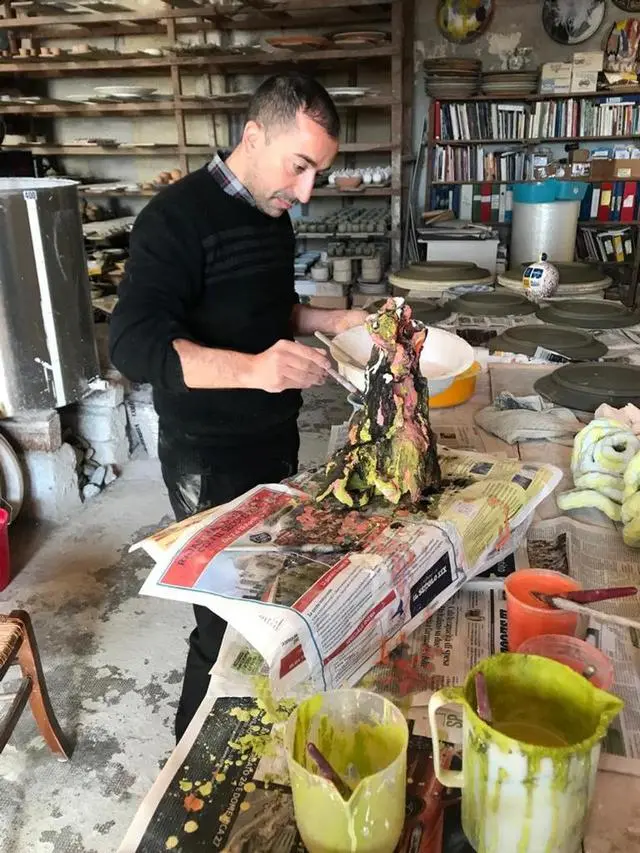 Salvatore Arancio
. A practice between Science and fiction, developed abroad
Gallery owners
23 March 2026
Salvatore Arancio
Salvatore Arancio. A practice between Science and fiction, developed abroad
Gallery owners
23 March 2026
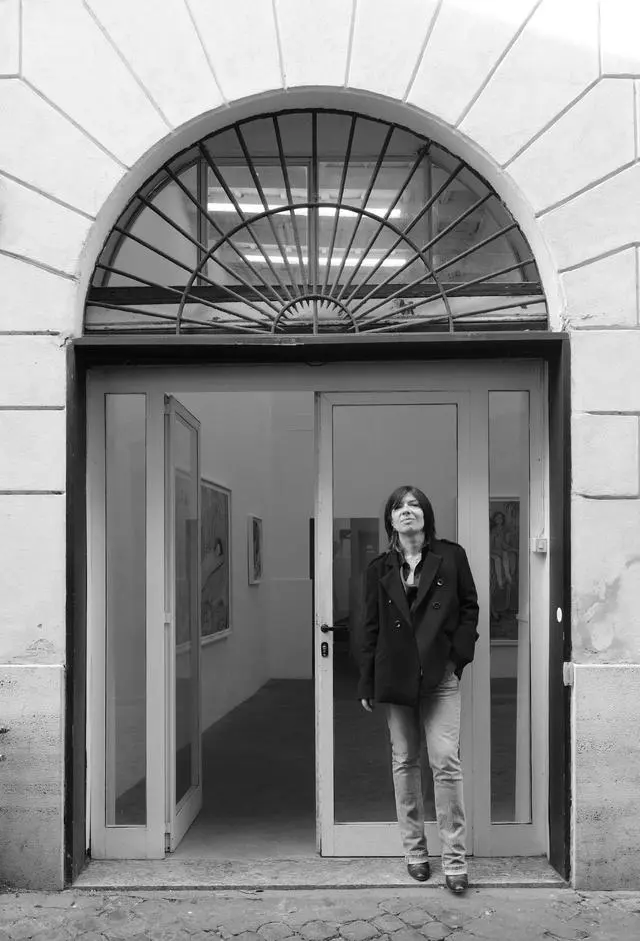 Carla Chiarchiaro
The poor perception of the cultural value generated by galleries is a limitation.
Artists
09 March 2026
Carla Chiarchiaro
The poor perception of the cultural value generated by galleries is a limitation.
Artists
09 March 2026
 Emilio Gola
: Painting the Story of His Generation
Emilio Gola
Emilio Gola: Painting the Story of His Generation