
04 July 2025 Athens Exhibition Says the Revolution Could Begin on Your Plate | 04 June 2025 Artforum, "Diana Anselmo" | 16 April 2025 Frieze, "Must-See: The Tears of Karl Lagerfeld" | 16 April 2025 Süddeutsche Zeitung Magazin, "Mit welcher Haltung kommt man in der Kunstwelt am weitesten, Maurizio Cattelan?" | 09 April 2025 The Berliner, "Consider Listening: An exhibition urging calm amidst outrage" | 02 April 2025 Wallpaper, "Aboard Gio Ponti's colourful Arlecchino train in Milan, a conversation about design with Formafantasma" | 26 March 2025 Frieze, "Diego Marcon’s Films Conjure a Familiar, Grotesque World" | 19 March 2025 Arts Hub, "1500-degree molten steel installation, inspired by Caravaggio, to drip from the ceiling of Mona" | 15 May 2024 Frieze, "Silvia Rosi Gives Voice to Her Parents’ Migration Story" | 30 March 2024 The Korea Times, "Foreigners Everywhere: Artist duo who inspired this year's Venice Biennale lands in Seoul" | 07 February 2024 Artnet News, "Ceramics Are as Contemporary as a Smartphone: Chiara Camoni on Her Tactile Sculptures"
Matthew Noble
interviews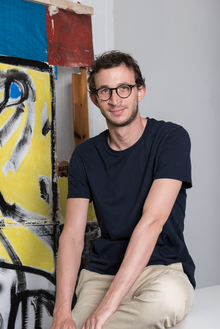
15 July 2026
Gallery owners
Matthew Noble: "Time, Not the Market, Is What Builds an Artist”
Gallerist
Investing in an emerging artist means taking on a risk that goes far beyond acquiring a work of art or organising an exhibition. It means committing to an artistic practice that is still evolving, supporting its production, building relationships with institutions and curators, and accompanying its development without yielding to the pressure for immediate results. It is an investment of financial capital, but above all of time, expertise and credibility. Matthew Noble (born in 1993), founder of ArtNoble Gallery, belongs to a generation of gallerists who see the market as the destination rather than the starting point.
In this interview, he explains what convinces him to represent a young artist, how an international career is built today, and why, in an increasingly fast-moving and speculative art system, long-term sustainability still depends on patience.
What indicators make you believe that a young talent has the potential for long-term market sustainability?
When I look at an emerging artist, the market is almost the last thing I think about. What truly interests me is understanding whether there is a genuine artistic practice—one that does not arise from responding to external demand, but from an internal necessity. There has to be something personal and distinctive, something that genuinely resonates with me, but also a sense of discipline in the way that language is developed and sustained over time.
When I visit an artist's studio, I always try to understand the person behind the work. The way they approach their practice, their consistency, and their willingness to engage in dialogue often reveal far more than the individual works themselves. The market can provide momentum, sometimes even significant momentum, but on its own it is never enough to sustain a career over the long term.
How important is a gallery's ability today to "build" an artist's market through art fairs, institutions, collectors and an international presence?
Today, a gallery is much more than an intermediary. It is someone who works alongside the artist over time, creating the conditions for their work to be understood, discussed and recognised in different contexts.
Art fairs, dialogue with institutions, relationships with collectors and an international presence only make sense if they are part of a clear direction. But all of this truly works only when there is a shared commitment between the gallery and the artist, built on trust and continuity. That is where genuine, organic growth comes from—not something that can be forced.
In recent years the market seems to reward increasingly rapid results. Has it become more difficult to provide financial support for artistic careers that require time to mature?
Yes, without a doubt. We live in a context of relentless overproduction, where results are expected and achieved at an ever-increasing pace, while artistic development inevitably follows a much slower rhythm. This creates a constant tension between the expectations of the market and the time that artistic research genuinely needs in order to develop authentically. Providing financial support for artists whose work requires time to mature is undoubtedly more difficult today, but at the same time it lies at the very core of what we do. If you truly believe in an artist's practice, you need the patience to support its development without forcing the process. Art history teaches us that many artists were only fully understood and appreciated at a much later stage in their careers.
Today the market may reward increasingly immediate results, but the real question is how much of this is actually built to last, and how much is simply driven by temporary speculative dynamics. That is why I believe it is essential to give time its proper value again—to allow for gradual development and sustainable growth, both for artists and for the system that supports them.
Which type of investment weighs most heavily: producing the works, participating in art fairs, communication, or building a curatorial network?
When I decide to represent a young artist, I don't really think in terms of which aspect "matters most," because in reality all of these elements are deeply interconnected. However, if I have to be honest, what truly makes the greatest difference over time is building a strong curatorial network around the artist. That is where genuine recognition is established—not just visibility. Producing the work and communication are both fundamental and deserve careful attention, but they can evolve and adapt over time. Relationships with curators, museums, foundations and other galleries, on the other hand, require time, continuity and mutual trust. When this kind of ecosystem functions well, it allows the market to develop in a more natural and lasting way, without forcing the process.
How much weight does an international educational background carry when deciding to invest in a young artist? Do studying or completing a residency abroad represent a real advantage today in terms of credibility and access to the global art market?
An international education or residency can certainly be an advantage, but it is not a decisive requirement. These experiences often provide opportunities for dialogue and visibility that can accelerate certain opportunities. However, what truly matters is the quality of the artistic practice. I have seen artists build very strong international careers without going through the most prestigious educational programmes, just as I have seen artists with outstanding CVs fail to develop a practice that is genuinely meaningful.
At a time when international collectors are becoming more cautious, do you believe that focusing on emerging artists is now a riskier strategy or, on the contrary, a more far-sighted investment than buying works by established artists?
In the current climate, focusing on emerging artists is undoubtedly a riskier strategy than investing in established names, which offer greater stability and predictability. However, if we think in terms of investment, it is precisely this initial uncertainty that, over time, provided the artist's career develops in the right way, can become the more far-sighted choice, with greater potential for growth. That said, I believe it is important not to reduce everything to a purely economic logic. Art is not created as an investment, but as an experience and an emotion. I have the feeling that today we are losing sight of this aspect, because we focus too much on future value and too little on what a work is actually capable of conveying in the present. Perhaps we should return to allowing ourselves to be guided more by this direct response, placing less emphasis on the market and more on the deeper meaning of art. And who knows—perhaps it will be precisely these more instinctive choices, driven by emotion, that will ultimately prove to be the strongest and most widely recognised, both culturally and economically.
How much influence do speculative collectors and the speed of the secondary market have today on the growth—or the fragility—of the careers of younger artists?
They have a significant influence, and in many cases a problematic one. The speed of the secondary market and the presence of more speculative collectors can generate very rapid early growth, but often on foundations that are not particularly solid. These dynamics create distorted expectations and imbalances that are difficult to correct over time.
In recent years, it has become increasingly clear that excessive speculation has made the system more fragile and uncertain. Some artists' markets have inflated far too quickly, without genuine institutional or curatorial recognition to support them. The result is a more unstable market, in which the careers of young artists have become increasingly vulnerable to fluctuations in demand and speculative activity.
For this reason, I believe it is essential to return to a slower and more collaborative approach shared by galleries, artists and collectors—one based on building cultural value before economic value, and on a vision that balances growth with long-term sustainability.
© All rights reserved
other interviews
other interviews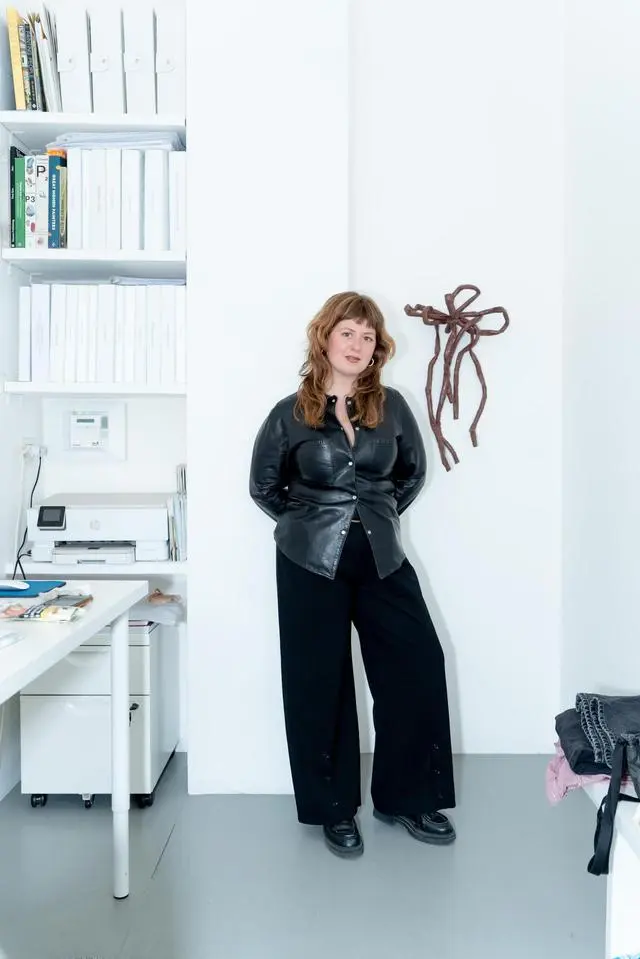 Virigina Russolo
Virginia Russolo: An International Journey Through Art, Anthropology, and Ritual Practices
Artists
14 April 2026
Virigina Russolo
Virginia Russolo: An International Journey Through Art, Anthropology, and Ritual Practices
Artists
14 April 2026
 Salvatore Arancio
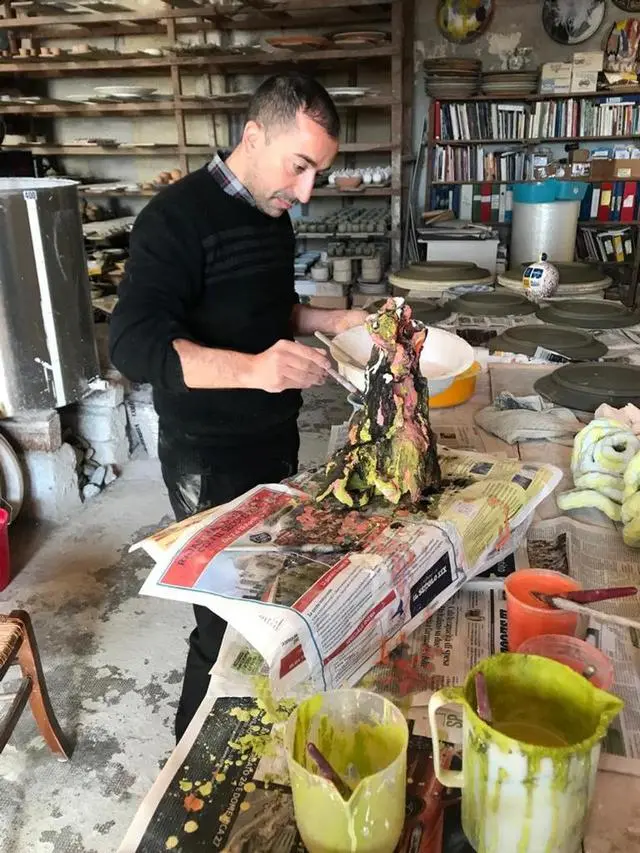
. A practice between Science and fiction, developed abroad
Gallery owners
23 March 2026
Salvatore Arancio
Salvatore Arancio. A practice between Science and fiction, developed abroad
Gallery owners
23 March 2026
 Carla Chiarchiaro
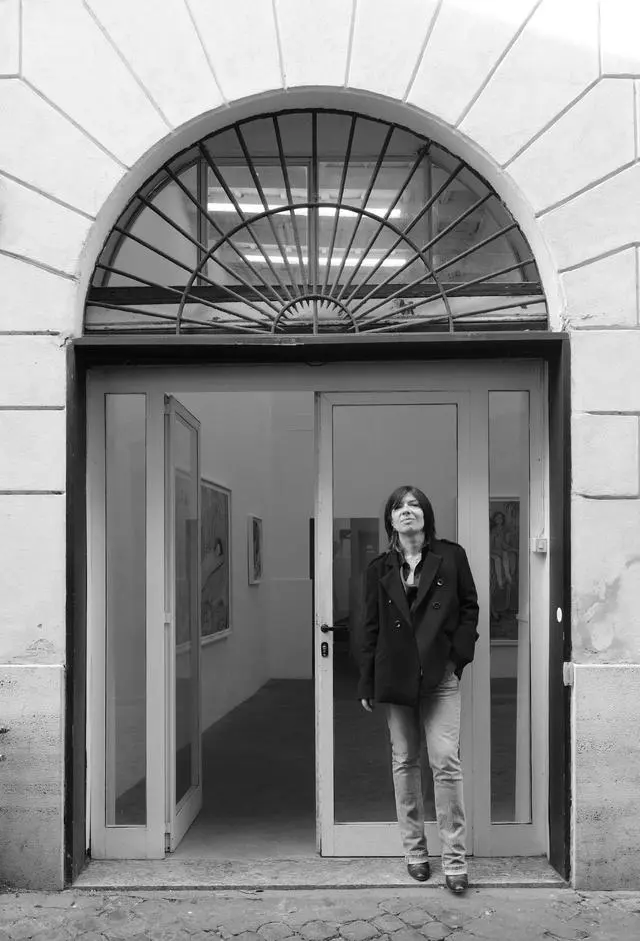
The poor perception of the cultural value generated by galleries is a limitation.
Artists
09 March 2026
Carla Chiarchiaro
The poor perception of the cultural value generated by galleries is a limitation.
Artists
09 March 2026
 Emilio Gola
: Painting the Story of His Generation
Emilio Gola
Emilio Gola: Painting the Story of His Generation